I just finished writing about trying to figure out my own retirement, and now I’m reading reports that NASA may be trying to bring an SR-71 Blackbird out of retirement after nearly 27 years.
That got my attention for a very personal reason.
I used to maintain them.
I was stationed at Beale Air Force Base in California from 1985 to 1990, working on the flight line. Like many of the people in my shop, I worked on several different SR-71s as well as the U-2.
Our responsibilities included the insulation bays, ejection seats, personnel parachutes, survival kits, and drag chutes. We had our hands on those airplanes almost daily.
It wasn’t exactly the glamorous Mach 3 part of the Blackbird everyone likes to talk about.
A lot of what we maintained was equipment you hoped would work exactly as designed if the glamorous part ever stopped working.
One of the less glamorous jobs involved working in the insulation bays. The Blackbird operated in an environment of extreme heat, and those areas helped protect the aircraft’s mission equipment.
Then there was the fuel.
Anyone familiar with the SR-71 has probably heard that it leaked fuel while sitting on the ground. I can personally confirm that particular feature.
The insulation we worked around could become soaked with fuel. There were plenty of days when I’d be reaching into a bay and fuel would run down my arms and soak my uniform.
Today, people stand behind ropes in museums admiring the Blackbird’s sleek lines and incredible engineering.
I occasionally remember what one smelled like from about six inches away.
That’s a slightly different relationship with the airplane.
At the time, though, it was simply our job.
You went to work, did your inspections and maintenance, took care of whatever needed attention, and helped get the aircraft ready to go again.
I don’t remember walking onto the flight line every morning thinking, Wow, I’m working on one of the most extraordinary aircraft ever built.
It was an SR-71.
And we had work to do.
Looking back more than 35 years later, that’s probably the part that seems most surreal.
Aircraft that were simply sitting on our flight line at work are now museum pieces that people travel across the country to see.
Which brings me back to what’s happening today.
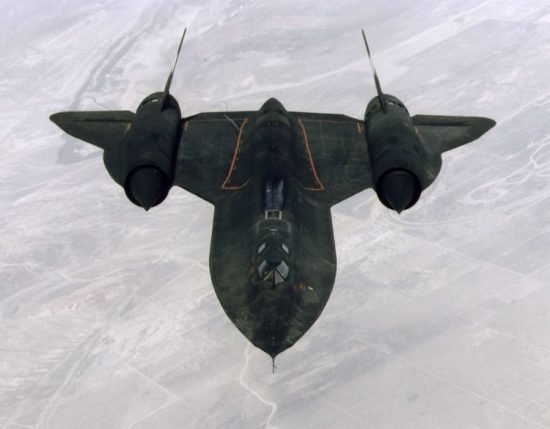
The aircraft getting all the attention is SR-71A 61-7980, NASA tail number 844. NASA used it for high-speed research during the 1990s, and on October 9, 1999, it made what became the final flight of any SR-71.
For years afterward, 844 sat outside NASA’s Armstrong Flight Research Center at Edwards Air Force Base.
Except now it doesn’t.
The aircraft was quietly removed from its outdoor display and moved into a hangar. Recent reporting says NASA has contacted former SR-71 personnel about helping with a possible effort to make 844 flyable again.
NASA isn’t saying much publicly.
Which, considering we’re talking about an SR-71, somehow seems appropriate.
Getting one back into the air would be no small undertaking.
This isn’t like pulling an old car out of the barn, changing the oil, putting in a fresh battery, and seeing if she’ll start.
The airplane is nearly 60 years old and hasn’t flown since 1999. The people who knew how to maintain and operate it have long since moved on or retired. Specialized ground equipment, parts, fluids, fuel, and decades of institutional knowledge would all have to be dealt with.
As someone who once worked on these aircraft, I also know there are a thousand little things involved in keeping an airplane flying that never make it into the stories about speed records and altitude.
And the SR-71 was never exactly a simple airplane to begin with.
Could NASA actually make 844 fly again?
I don’t know.
Part of me looks at the practical side and thinks about everything that would have to come together after almost three decades.
Then another part of me remembers what airplane we’re talking about.
The SR-71 was an aircraft that routinely did things that still sound almost ridiculous today. More than 2,000 miles per hour. Around 80,000 feet. Sustained flight above Mach 3.
And it was designed more than 60 years ago.
So I’m probably not going to bet against the engineers just yet.
There’s also something I find amusing about all this.
I just retired after 42 years of federal service and have been trying to convince myself that retirement means it’s okay to slow down.
Apparently somebody forgot to explain that to the Blackbird.
I don’t know whether NASA 844 will ever leave the ground again. Right now, NASA isn’t confirming that it will.
But I’ll admit something.
After spending five years at Beale with my hands on these airplanes, getting soaked with fuel, working on parachutes, ejection seats, survival equipment and drag chutes, and watching Blackbirds come and go from that flight line…
I’d sure like to hear those J58s light off one more time.


Leave a comment